

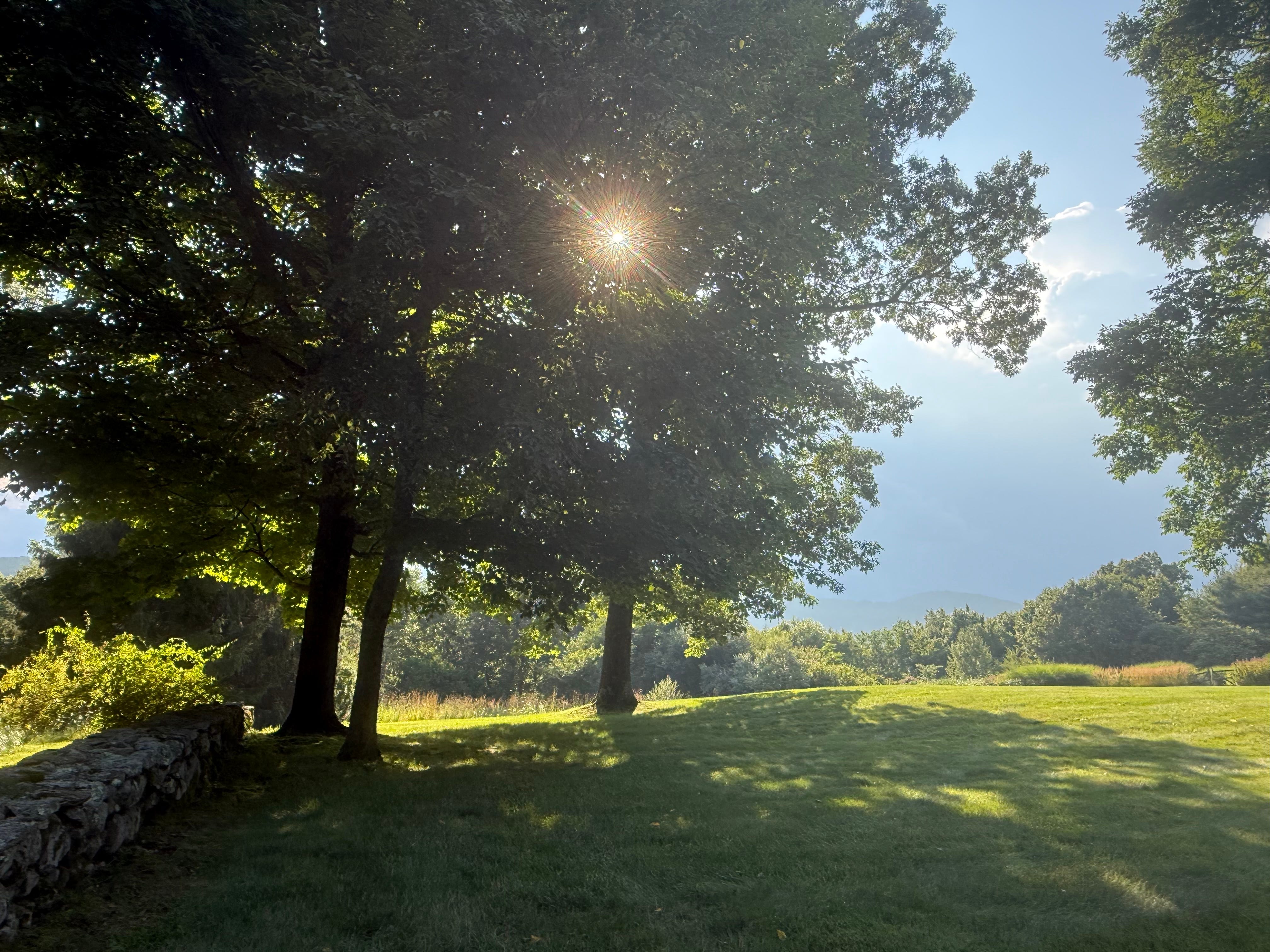
It’s been a long, strange, rainy summer in Connecticut. Now the end is near, and the tips of the more audacious trees are turning orange. School forms are due. My kids are restless.
I’m also restless as I enter the last trimester of gestating my first novel—I’m on the verge of becoming an author. About twenty-five weeks left until she’s in the world, which feels at once like a long time and no time at all. The Braxton-Hicks express themselves in nervous excitement and disbelief. Self doubt nips at my heels, while the magic of my novel—what it has taught me, what it has offered me—lay ripening in me, too. Just like when I delivered my babies, I will be changed afterward but I don’t yet know how.
All I know is I have had this dream for a long, long time, and it’s finally coming true.
But what if it’s not good when I achieve it? What if the dream was really a cardboard cut out, and the real experience of achieving my dream sucks?
And, even scarier, what if I don’t deserve the thing I most want?
This is, of course, my ego smacking her gum loudly. Fear baring her fangs, ready to sabotage.
Because the truth is, my novel is just a book. People will read it. People won’t read it. Some people will love it and some won’t. They will go on with their lives and I will go on with mine. I want to write a play and a new novel. I want to share more here on Substack. Life will keep on living. My kids will need new shoes, and I will load and unload the dishwasher, and my dog will puke on the carpet. But I will be doing it with my first novel in the world, for better or worse.
During the solar eclipse the other day, I waited for some big truth to reveal itself. But what came through was that maybe we don’t arrive at the truth at all. The truth is in us, already and always.
Sometimes our knowing is muddy–-unclear, thick, and sludgy. What is in my way? What is clouding my vision? Maybe I just need to get out of my own way. Maybe the truth doesn’t need grasping to find, but letting go.
Transformation requires giving up control.
Ten years ago, I was a bitter, vegan, die-hard Liberal New Yorker completely disconnected from her body. From her feelings. She was angry as shit but not relating to it. She was swallowing handfuls of narratives she didn’t question, and choking on them.
She was pale and lifeless and scared shitless of making the wrong move, of her truth, of saying what she was seeing or feeling. She had been in therapy for fourteen years, and while she had more insight and understanding of the soil in which she grew, she was still rigid and fawning. She had three children she loved so fiercely it scared her and still felt ill equipped to raise. She focused solely on her flaws, her thick thighs, and her husband’s moods. She was scared of what lay beneath, of wanting more for herself. Of asking questions.
My transformation started when I lost someone very dear to me, a kind of parent, and this rocked me to my core. I had to relearn how to exist in the world, navigate grief and exhume what it wanted to teach me about myself.
I started eating meat again, and, for a period, only meat, and I started questioning everything. The diet change wasn’t the answer I thought it would be (it never is) but a robust first stepping stone. (Pendulum swings are normal when change is on the menu.)
I also started writing a lot. A LOT. I could no longer ignore the inner press to express my stories.
And a most extraordinary thing happened: Not in spite of my grief and some deeply uncomfortable life dramas but because of them, I fell in love with life again. I fell madly in love with my husband, and with my body. I was faced with my own shadows, with my lack of self-esteem, with my fears.
And after I acclimated to this new version of myself, I again veered into orthorexia, my perfectionism taking a new route in its rigid rules about diet and health—even if they were better choices, the sum of them led me to suffocate under their weight.
Because growth is a spiral, not a straight line. We revisit the same wounds over and over again from (hopefully) a new vantage point. So if you are stuck thinking “this, again?” YES. It’s that again, and you’re also not the same as you were the last time you dealt with it.
Transformation came again. Because it was never really my body that was the problem but my mind.
In the last few years, I stopped subscribing to narratives that don’t align with me. I quit subscribing to politics, being an unwitting tool in an unwinnable unending argument. I stopped consuming content blindly. In the era we live in, this is incredibly hard to do, but I think more and more necessary if we are to thrive.
I grew curious and delved deep into my shadows. This has been the hardest and most rewarding work I’ve done—the scariest places are where all the gold is.
I had the idea for my novel back in 2019, when I spent an afternoon rage-weeding my garden. It lay dormant in me while I worked on a memoir, excavating my past. Then I chucked the memoir, and the story of the woman in the garden resurfaced, ready to be written.
I wrote a novel about the transformation that happens when long-hidden things come to the surface. When you can no longer tolerate the lies that you tell yourself, the lies you inherit, the truths you buried, the stories your ancestors buried, the ones hurting your body and making you sick. When life shoves your face in a pile of shit, and then that shit becomes the doorway.
So I suppose this Substack will be about transformation, self love and nourishment in all the ways I can find it and share it. I want that for my readers. We should all honor our hunger and our pain and our joy and our pleasure. Not because it makes us good or better than so-and -so, but simply because it’s our birthright. I mean, after all, we’re all just balls of electricity and stardust and love. Might as well get all the juice out of this being alive thing.
What if we just start each day with that?
Until next time,
Lilah
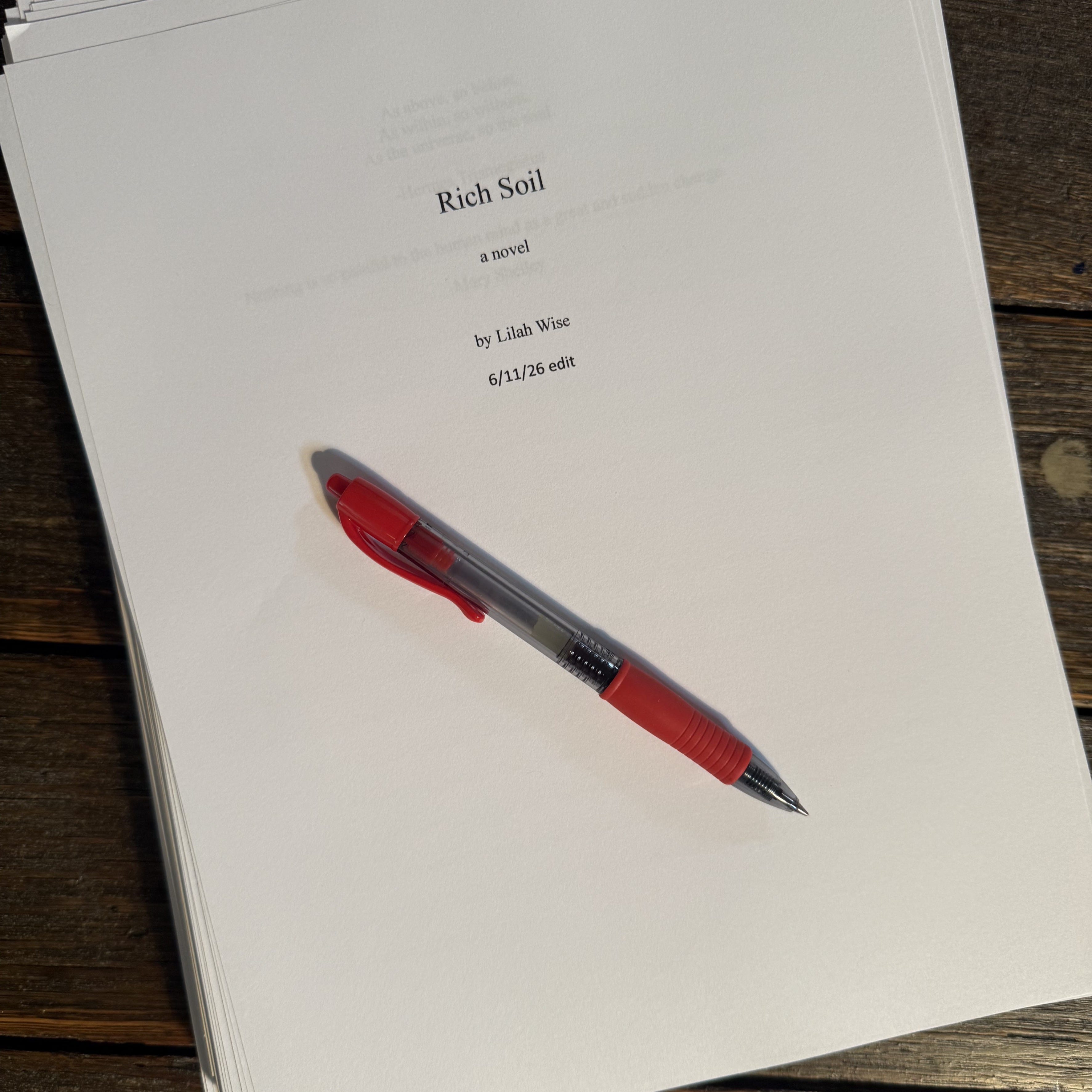
PS my Novel Rich Soil is coming Feb 9th! Here is a preview:
Grief can unearth the secrets we choose to ignore....
When Kate Talbott’s husband, Raj, dies suddenly of a heart attack, the life she has so carefully constructed disappears with him. Newly widowed at forty-four, Kate retreats with her eleven-year-old daughter to True Farm, the sprawling Connecticut property that has belonged to her family for generations—and where Raj’s ashes now lie buried.
As Kate sorts through the digital remains of her husband’s life, she discovers that their seemingly solid marriage held secrets of its own. Meanwhile, the farm pulls her deeper into memories of her complicated parents, her own fraught relationship with food and perfection, and the family history she has spent much of her adulthood trying to escape.
What begins as a summer of mourning becomes an excavation—of a marriage, a family, and ultimately Kate herself. To move forward, she must confront what has been hidden beneath generations of privilege, silence, and carefully maintained appearances and decide what deserves to be carried into the future.
Darkly funny, sensual, psychologically astute, and threaded with the possibility of the unseen, Rich Soil is a novel about the stories families bury, the identities women inherit, and what can finally grow when the truth is allowed into the light.
I loved reading this so much! You are incredible and I can't wait to read your book. Cheering for you always. -M XX